There are moments when you think: isn’t AI wonderfully useful?
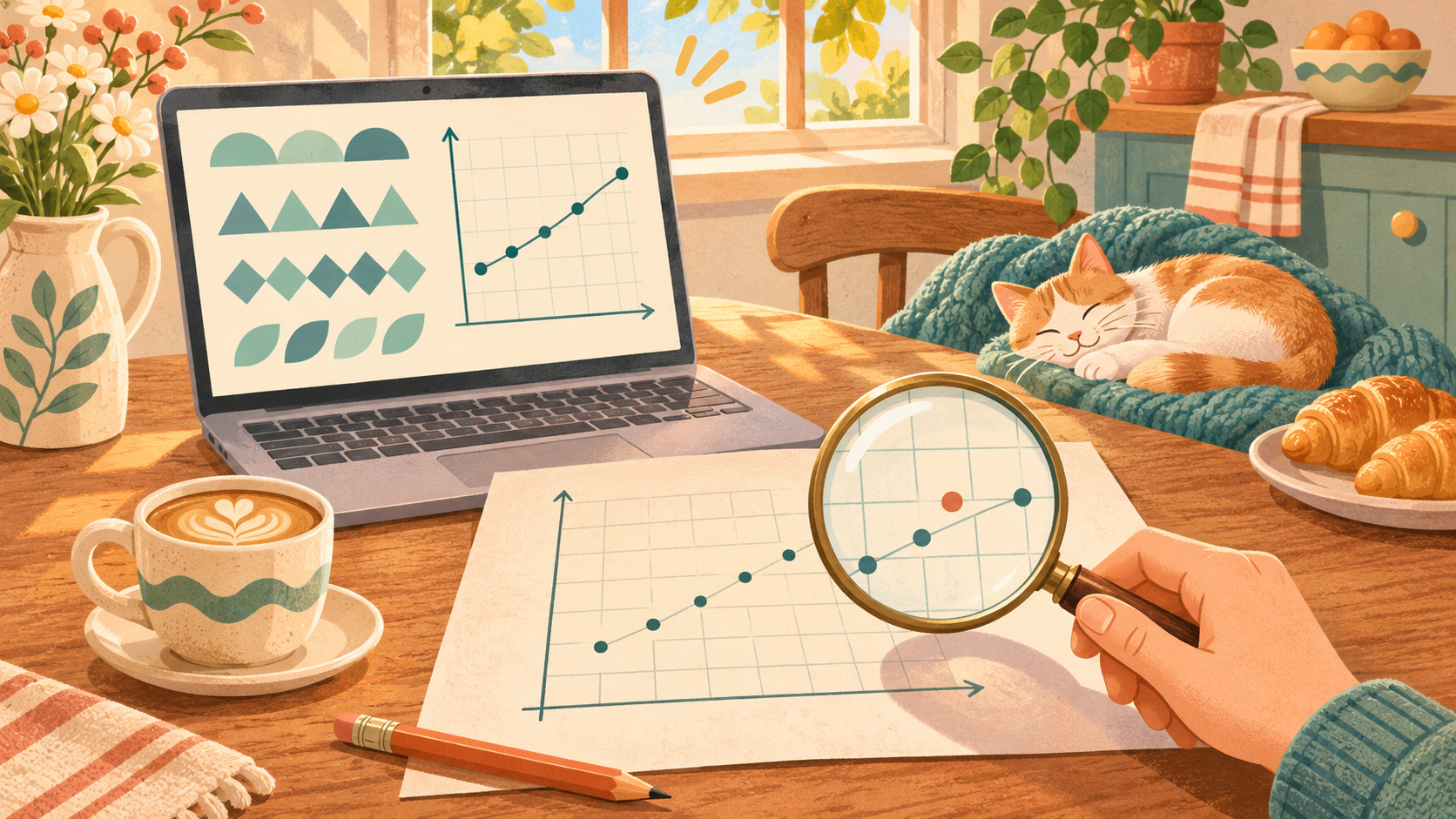
Take homework. My daughter had a maths test coming up. Coordinates, axes, graphs. The sort of things you assume you still understand perfectly well as a parent. Until you actually sit down and try to explain them.
So I called in some help. Not a private tutor, but AI.
In no time, I had a complete set of exercises. Neatly divided into sections, clear questions, answers included. Everything looked just right.
I was pleased with myself.
Until I took a closer look.
There was a problem with how the coordinates were written. Sometimes a comma was used, sometimes a semicolon. Hardly a global catastrophe. But rather confusing for a child who is trying to learn the rules.
And the best part? The AI had presented the whole thing effortlessly, without the slightest hint of doubt.
It looked right. Which, as it turned out, wasn’t quite the same as being right.
The persuasive power of a polished answer
That may be one of the strangest things about AI.
A brilliant answer and a flawed one can look exactly the same. Both appear neatly written on your screen, with the same calm tone, tidy headings and often a very convincing explanation.
No little red warning light comes on when the system gets something wrong.
And us humans? We do love a well-presented result.
A tidy table. A nicely written story. An attractive presentation. Before you know it, you’re thinking: well, that must be correct.
I catch myself doing it all the time.
The intern who never gets tired
Sometimes I picture AI as an incredibly enthusiastic intern.
One who never gets tired, volunteers for everything and comes back with a finished result in seconds.
“I’ve already worked it out for you!”
Brilliant.
Except every now and then you have to ask: “And did you check that it’s correct?”
To which the intern would probably reply: “Of course!”
And then you check it yourself anyway.
Not because the intern is useless. Quite the opposite. That kind of help can be enormously valuable. But enthusiasm, speed and an impressive presentation aren’t guarantees of quality.
Who’s taking a second look?
I come across the same question at work, just in a different setting.
We use technology to prepare documents, analyse information and make processes smarter.
And there too, the result can look impressive.
But someone still needs to decide whether it’s good enough. Whether the right information was used. Whether something is missing. And, above all, whether we understand what happens if the answer is wrong.
It doesn’t have to be complicated.
Sometimes it’s simply a matter of reading something again. Asking a question. Or saying out loud: “Hang on a minute. I don’t think this is quite right.”
Which is exactly what we try to teach children at school.
Perhaps we should do a little more homework ourselves
The funny thing is, I regularly tell my daughter to read questions carefully. Not to rush her answers. To think before writing something down.
Meanwhile, I’m sitting behind my laptop, getting a complete answer served up at the click of a button.
There’s a certain irony in that.
We teach our children to think critically while increasingly using tools that make thinking so wonderfully easy.
There’s nothing inherently wrong with that. I’m the last person to suggest we should go back to doing everything with pen and paper.
But perhaps there’s one habit we shouldn’t outsource.
Taking a moment to think for ourselves.
Not for every shopping list or apple pie recipe. But certainly when it matters.
Because AI can take a great deal of work off our hands.
It’s just worth making sure we still know what we’ve got in those hands.
And now, coffee. It is the weekend, after all.