On smart systems, wrong doorsteps and the art of thinking for a moment.
Black Friday is nearly here. Offers are everywhere, and delivery drivers are bracing themselves. Before long, half the street will be lined with cardboard boxes.
Imagine a delivery driver. Let’s call him Jamez.
Jamez has a clever route planner, an impressive dashboard and a system that tracks exactly how many parcels he delivers.
And Jamez is good. Very good, in fact.
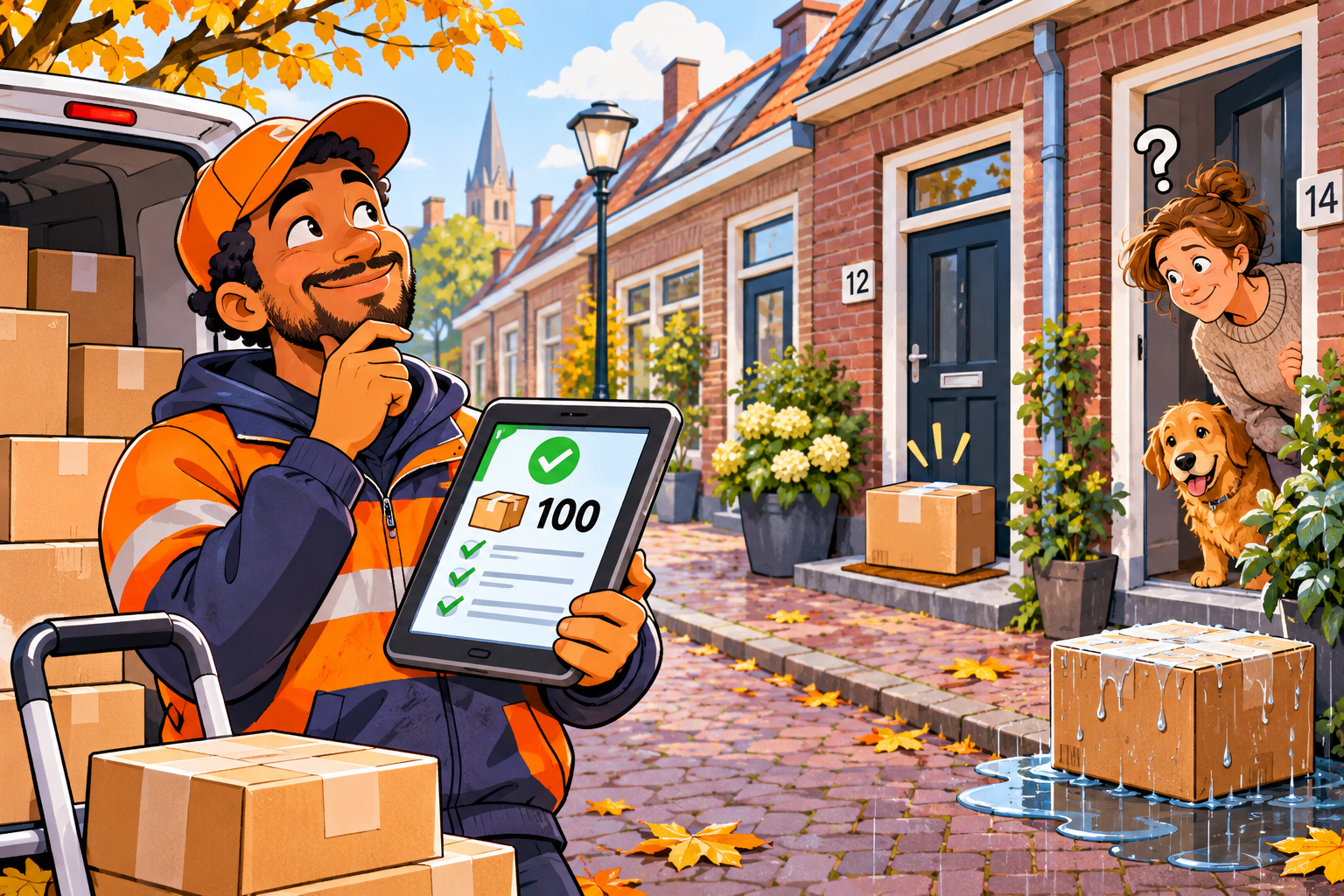
On a busy Friday, he delivers a hundred parcels. His dashboard turns green. Every box is ticked.
Mission accomplished!
According to the dashboard, anyway.
Three parcels have ended up with the wrong neighbours. Two are sitting outside in the rain. And one has been thrown over a fence.
But hey, a hundred parcels delivered!
A ticked box isn’t the same as success
We’ve all been there.
A packed diary cleared. Every email answered. The to-do list empty. What a lovely feeling.
But did we actually achieve what we set out to achieve?
That’s a different question.
And this is where things get interesting. Because while Jamez delivers his parcels, ever-smarter digital colleagues are appearing.
AI systems that write texts, make plans and carry out tasks independently. Lightning-fast, no coffee breaks, and usually no complaints about Monday mornings.
Impressive.
But what happens when a system does exactly what you ask, without quite doing what you mean?
A bit like Jamez, dutifully pressing ‘delivered’ a hundred times.
Take a moment to check the doorstep
Recently, I used AI to create a maths practice test. Nice questions, tidy answers, beautifully laid out.
Except the AI had mixed up the notation for coordinates.
Not the end of the world. But rather confusing for a child who’s trying to learn the rules.
The curious part? The AI could explain the correct rule perfectly well. It just didn’t apply it consistently.
A little like Jamez knowing exactly where you live, yet leaving your parcel two doors down.
Perhaps we need to get better not only at giving instructions, but also at looking at the results.
First, see what is needed.
Then do what fits.
And finally, take responsibility for what happens.
It needn’t be more complicated than that.
And Jamez?
The next morning, he discovers a parcel on his own doorstep.
Addressed to the neighbours.
Jamez sighs, picks up the box and walks two doors down.
Perhaps that’s his most important delivery of the week.
Not because it makes his dashboard any greener.
But because the parcel finally reaches the right place.
Perhaps we should spend a little less time asking how much we’ve done today. And a little more asking whether it ended up where it should.