I have a problem. Well, “problem”…
I enjoy rather a lot of things.
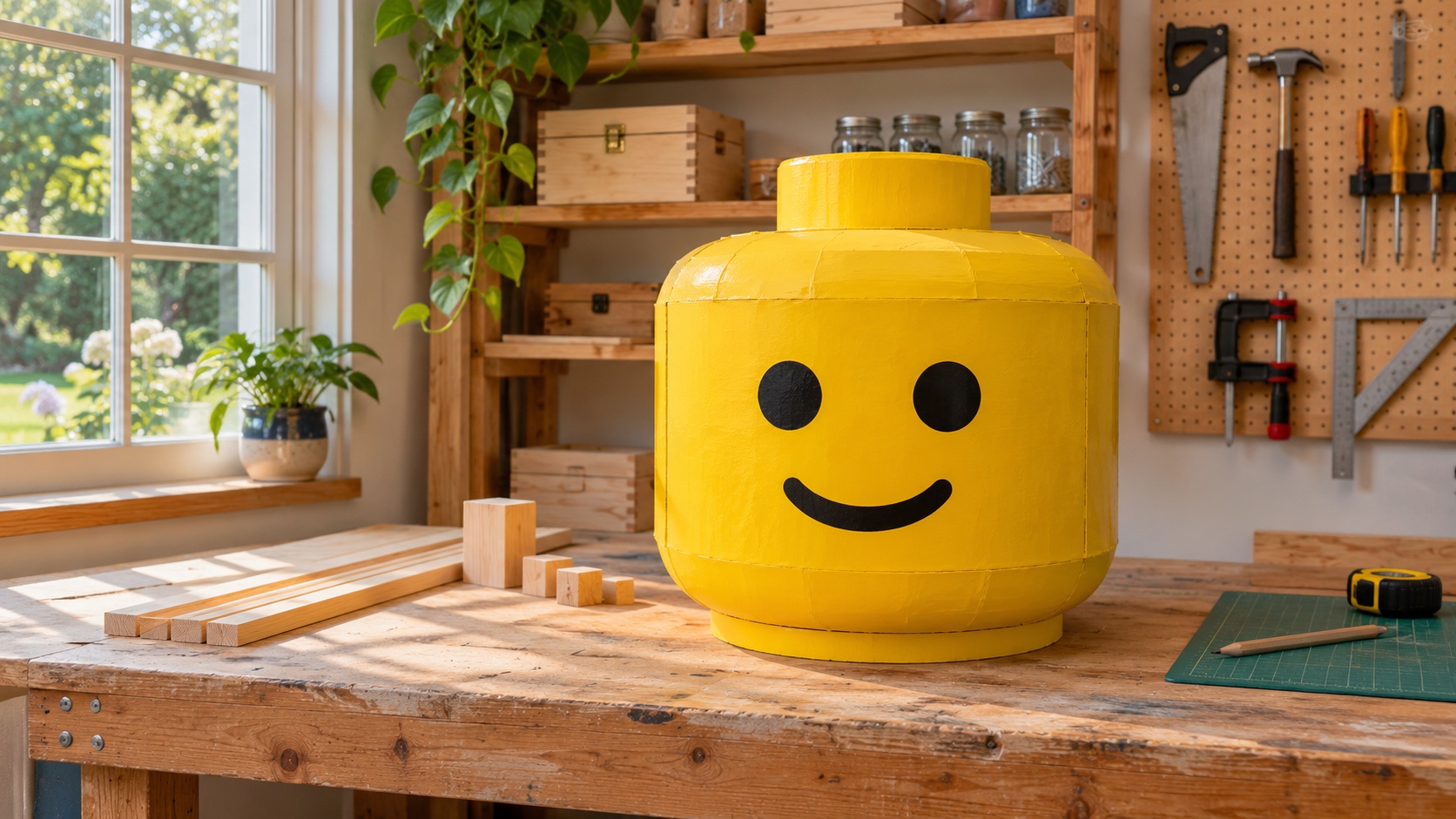
Writing a book, making things out of wood, experimenting with AI. And right now, I’m even building a life-size LEGO minifigure costume for carnival.
Oh, and I have a day job too.
I used to get quite restless about it all. All those ideas, all those projects. When was I supposed to finish them?
Lately, I’m beginning to understand something.
The problem isn’t that I have too many projects. The problem starts when I decide they all need to be finished quickly.
The schedule nobody asked for
We’re used to planning everything. What are we going to do? When do we start? And, above all: when will it be finished?
At work, that’s often necessary. Deadlines are real, and other people sometimes depend on what you deliver.
But why do we do the same thing at home?
I’m making a wooden box for a book I’ve written. By now, that project consists of a book, 24 wooden blocks and a fair number of wooden slats cut to size.
It’s taken time. Much more than I first expected.
And you know what?
That doesn’t matter one bit.
I’ve enjoyed working on it. Sometimes for an entire afternoon, sometimes for an hour, and sometimes not at all for weeks.
It’ll get finished.
Keeping track isn’t the same as feeling rushed
What really helps me is having an overview.
These days, I use Trello to keep track of my projects. With a little help from AI, I make sure my ideas, decisions and next steps are written down somewhere.
That means I don’t have to remember everything.
More importantly, I can leave a project alone for a while without worrying that I’ll lose the thread.
That brings a surprising sense of freedom.
I don’t have to keep working on something all the time to know it can still move forward.
The art of picking things up again
Perhaps we’ve misunderstood consistency.
We often think we need to work on something every day to make progress. But for many personal projects, that simply isn’t necessary.
You can put something down. Pick up another idea. Come back a few weeks later and carry on.
As long as you know where you left off.
And that LEGO costume?
I’m sure it’ll work out. Or I’ll discover along the way that something doesn’t work at all and have to start again.
That’s fine too. I’ll probably learn the most from that.
A plan tells me where I want to go. An overview shows me where I am. But I don’t have to put a time limit on every step.
Perhaps that’s been my biggest discovery over the past year.
Not how to get more done.
But how to keep doing the things I enjoy without losing the enjoyment along the way.
Because, in the end, for me it comes down to something very simple:
Doing the right things with enjoyment and attention.